

Have you ever experienced the sudden relief after a test, that you thought you’d fail, went really well? Have you experienced a sudden low after a really amazing concert of your favorite band?
If so, congratulations, you’re not alone. Human emotions actually come in opposing pairs. When you experience an extreme high of happiness, you experience some sadness in order to balance out the emotions. Same is with fear. This is called the opponent process theory of emotions, which was proposed by Richard Solomon in 1980.
Now an interesting question arises, has this ever been explained in the Holy Qur’an? If so, what verses point towards it?
Turns out, the answer is yes, indeed there are certain verses that point towards this theory:
- “So indeed with hardship comes ease. Indeed with hardship, comes ease.” – Qur’an 94:5-6

One of the most famous verses of the Holy Qur’an from Surah Ash-Sharh (Chapter 94), directly points towards the opponent process theory of emotions by giving the example of hardship and ease. For example, right before the tests or examination results, a student is really anxious, maybe even panicking while awaiting them. But once they find out that they, unfortunately, failed a test/exam, they eventually make peace with it, and their anxiety slowly dies out.
In light of the opponent-process theory, they experience fear and anxiety, and then they experience the opposing emotion, that is, calmness and relief, in order to balance it out.
2. “But perhaps you hate a thing and it is good for you; and perhaps you love a thing and it is bad for you.” – Qur’an 2:216
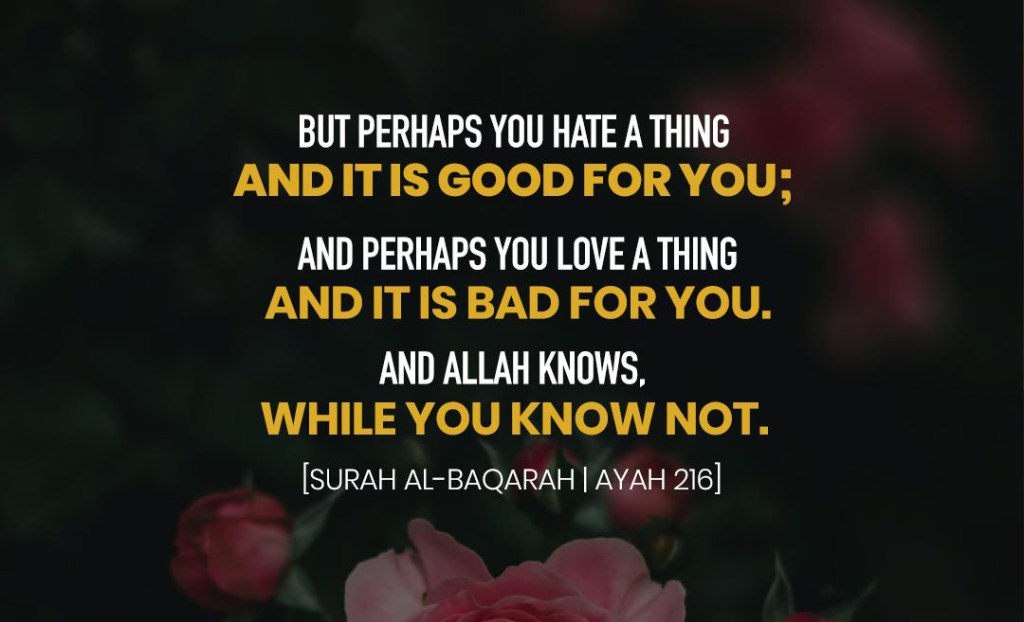
Another verse from Surah Al-Baqarah (Chapter 2) can be understood in light of this theory. There exist a number of things whose aftereffects are opposite to their primary effects, e.g. drugs. When consumed, the drugs produce a positive feeling, but the aftereffects of them are severely negative, sometimes even fatal.
Similarly, studying for the tests may feel boring, or going to your office may feel tiresome, but in the long run it is better for you, since it provides you your livelihood.
3. “The worldly life is nothing but enjoyment of delusion.” – Qur’an 3:185

Present in Surah Ale-Imran (Chapter 3), this verse depicts the primary aspect of emotions in light of the theory. E.g. attending a concert, enjoying a weekend, partying with friends, etc. trigger a high amount of happiness, but it only lasts for a few hours before the opposing emotion kicks in to balance it out.
Some scholars like Moulana Mawdudi have interpreted the latter part as “illusionary enjoyment,” which supports the opponent-process theory as well.
4. “And We created you in pairs.” – Qur’an 78:8
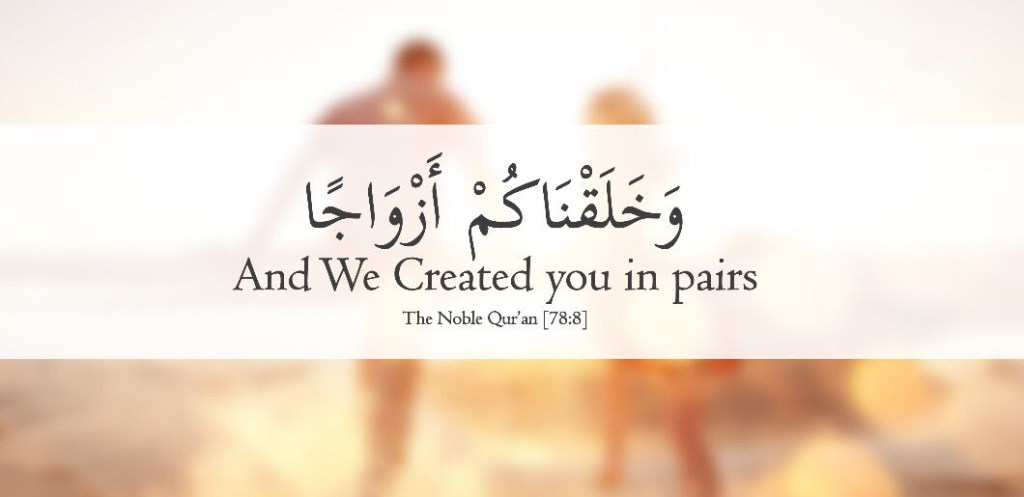
Another one of the most famous verses from the Holy Qur’an, this verse has been used in various contexts. The most famous interpretation being that of men and women, another being that of good and bad people, so on and so forth.
However, analyzing this verse in context of Richard Solomon’s theory, it gives a whole new meaning to it, depicting that God has created human beings in a “pair of emotions”, and in this context, the pair being that of opposing emotions. E.g. happiness/sadness, fear/relief, etc.
What other examples can you think of that may be supporting the opponent process theory of emotions proposed by Richard Solomon? Let us know in the comments below.


It is so refreshing to read multiple interpretations of popular verses we have been reading for years. This article has encouraged me to start devoting more time to understanding
Quran for the depth of its meaning requires time and devotion.
LikeLike