

There are no great limits to growth because there are no limits of human intelligence.
Ronald Reagan
In December 2024, Oxford made an announcement that had the internet in stitches (or as they say, rolling on the floor laughing): it officially recognized the word brainrot. Not only did it recognize it, the word brainrot became the Oxford word of the year, winning over by more than 37,000 votes.

Brainrot, as defined by the Oxford dictionary, refers to the to the “supposed deterioration of a person’s mental or intellectual state, especially viewed as a result of overconsumption of material (now particularly online content) considered to be trivial or unchallenging. Also: something characterized as likely to lead to such deterioration.”
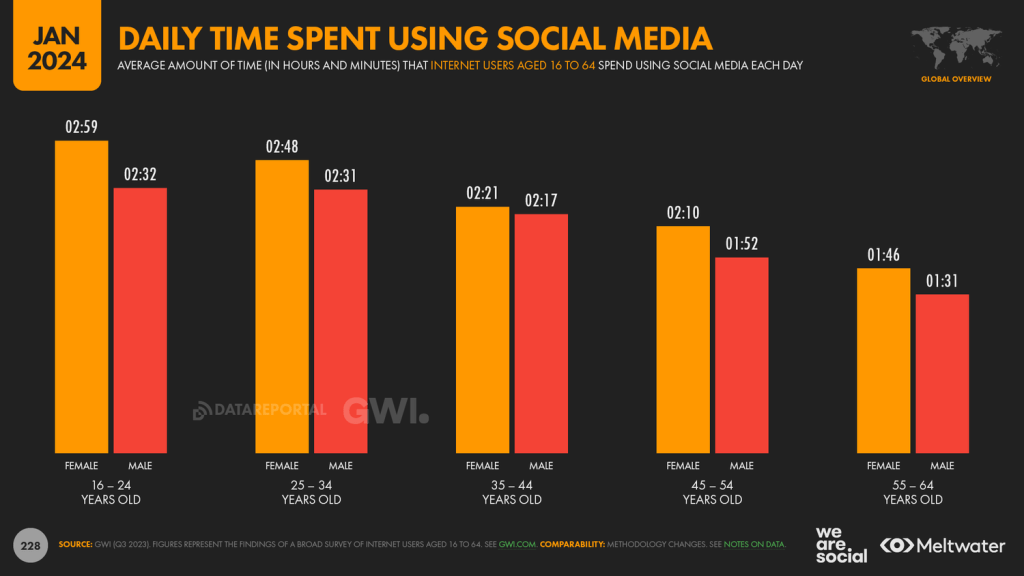
In today’s day and age, all social media platforms have incorporated the use of short-form video format named reels. Although beneficial in transferring maximum information in short amount of time required, reels have had adverse effects on its consumers as well, the most prominent of them being the shortened attention span. According to an experiment conducted by Dr. Gloria Mark (Professor: Informatics at the University of California, Irvine) initially in 2003, the average attention span of human beings has significantly declined over the past two decades:
| Year | Average Attention Span |
| 2003 | 150 seconds |
| 2013 | 75 seconds |
| 2023 | 47 seconds |
Brainrot has taken over the internet by the storm, and can be termed as a modern day digital plague, adversely affecting our critical thinking and making us lose our precious time. Can Islam help us fight this plague? Let’s break it down and have a look:
1. Restrain Social Media Use

“Among the excellence of a person’s Islam is that he leaves what does not concern him.”
– Prophet Muhammed ﷺ
[Jami` at-Tirmidhi: 2317]
As the famous author Zig Ziglar once said, “The first step in solving a problem is recognizing that it exists.” We need to acknowledge the fact that the social media platforms actually push towards making the reels the new norm, before we understand ways to tackle it.
The advice of the Prophet ﷺ, mentioned above, extends towards the way we use social media these days as well. Endless reel consumption, or as we call it, doomscrolling, often depicts content that is of little to no use in our lives, Time management tool, introduced by Meta for both Instagram and Facebook, helps us maintain a daily time limit to utilize either of the platforms. We must start by using this tool to restrain our social media utilization.
2. Increase Focus Time

“There are two blessings that many people are deceived into losing: health and free time.”
– Prophet Muhammed ﷺ
[Sahih al-Bukhari: 6412]
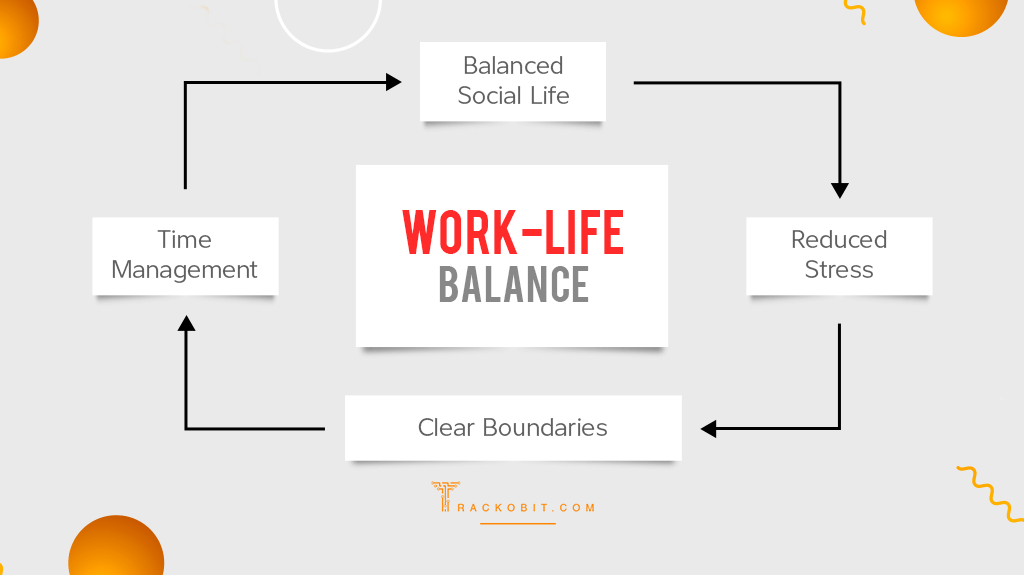
In the previous article, we discussed on what is focus time and how we can use it to enhance our work-life balance. However, focus time can also be utilized to counter brainrot.
The Prophet ﷺ strictly advised against wasting time, especially during one’s youth, and in some narrations, it is mentioned that a person’s youth will be questioned during the day of judgement. Implementing focus time directly counters distractions, whether it is during our working hours or leisure activities, and thus, by staying away from distractions, we do away with social media content that results in brainrot. It is also worth mentioning that focus time also enhances our productivity at work and creativity outside work.
3. Consume Quality Content

“Indeed, the hearing, the sight and the heart will be questioned.”
– Qur’an 17:36
It is important to understand that social media, or its content, isn’t inherently harmful or useless. Social media, like any other tool in cyberspace, can be of great use and information if used carefully.
When we have successfully restrained ourselves from overusing the social media and have incorporated focus time, we can start consuming better content that can help us in our walks of life. Start by exploring content creators that provide a form of education, be it in academics, sports, information technology, soft skills, so on and so forth, and follow their content on platforms like YouTube, Instagram, etc. instead of low-quality content.
We must remember, that the questioning of our eyes, ears and hearts isn’t restricted to the real life, but also extends and applies to what we see in the cyberspace as well.
4. Pursue Delayed Gratification

“No soul can imagine what delights are kept in store for them as a reward for what they used to do.”
– Qur’an 32:17
Lastly, the ultimate weapon against the plague of brainrot is the pursuit of delayed gratification instead of instant gratification.
We all are well aware of the fact that social media algorithm rewards us with instant gratification, prioritizing short-form content over a long-form one. When our needs and desires are that easily satisfied, it becomes more difficult for us to pursue long term goal and vision, leaving us unproductive, demotivated, and in some cases, even self-destructive.
Islam, on the other hand, advices and pushes us to delay our gratification. When there are no means to obtain immediate pleasure or happiness, it becomes easier to set long term goals with a vision. The pursuit of that goal, in turn, helps us develop self-control as well as a structured routine in our day-to-day lives that helps us move one step closer to the goal each day.
In conclusion, we can say that brainrot has become a serious issue in today’s day and age, and has affected people of all age groups, be it children, teenagers, young or old. Brainrot eventually affects our critical thinking and harms our creativity, preventing us from exploring our skills, potential and our talents. Unfortunately, the social media algorithm often prioritizes short-form content that can gain more views in a small amount of time over long-form content that has lesser viewership despite having a quality content. Through Islam, we can incorporate changes in our lifestyle in order to tackle brainrot, thus preserving our mental health and creativity.












































 Revisiting Islam