
You don’t have to be an expert. No one is expecting you to be an expert. All you need to do is show up and be you.
Ruth Soukup
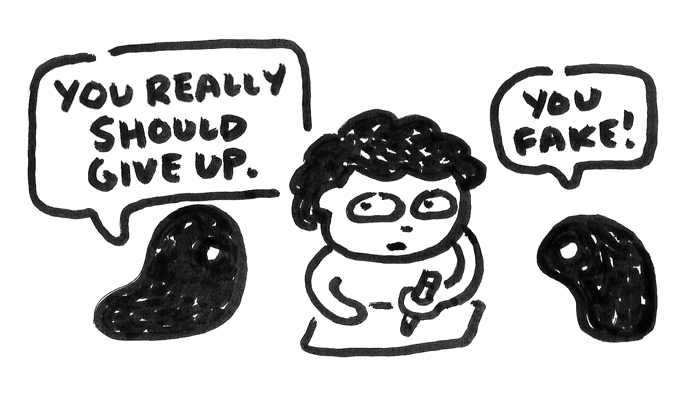
Imposter syndrome has been popularly described as a psychological phenomenon whereby an individual feels that he/she may be exposed as a fraud because they do not possess the talent and skills that others feel they do.
Imposter syndrome creates self-doubt, low self-esteem, and a constant fear that you won’t perform up to the expectations. This, in turn, forces us to constantly attribute our success to external factors, like A+ grades, number of sales closed, so on and so forth.
Over a period of time, imposter syndrome has become widespread and common amongst the youth, despite not being termed as a diagnosable mental illness. Can Islam help us tackle this syndrome that constantly sabotages our growth? Let’s have a look.
1. The Luck Factor:

“Indeed, Allah provides for whom He wills without account.”
– Qur’an 3:37
One of the harsh realities of life is that some people are more blessed than the others. Some people are born intelligent, some are born in rich and well-off families, some are born in first world countries, the list goes on.
Such people have not really put an effort to earn these blessings, they simply have been provided to them by God, and there’s nothing good or bad about it, for everything in life is a test, from an Islamic perspective. At times, we are blessed with an opportunity that we feel we didn’t really work hard to earn. We may be blessed with a great professor, or a good boss, an amazing work-life balance, a house at a really good location, etc.
The imposter syndrome kicks in when we question what have we really done to earn such things, whereas Islam tells us that just because you didn’t work hard towards it, doesn’t mean you shouldn’t have it. Every blessing is from The God, and God blesses whomsoever He wishes to.
2. With Great Power…Comes Great Responsibility:

“All of you are shepherds and each of you is responsible for his flock.”
– Prophet Mohammad ﷺ
(Al-Adab Al-Mufrad: 212)
Even if you feel that you’ve got something you didn’t really earn through hard work and sacrifice, remember that every opportunity comes with a responsibility, and every achievement comes with an answerability.
Suppose you become a team leader in an organization. Maybe you didn’t work hard enough to be deserving of the title, but maybe, God placed you in that role because the previous lead wasn’t considerate of the team members. So now, the blessing that you have, transforms into a responsibility that you must fulfill.
3. You’re Not Alone:

“And it is Allah’s will to lighten your burdens, for humankind was created weak.”
– Qur’an 4:28
It is essential to acknowledge the fact that overall we are not as strong as we claim ourselves to be. There are times when the consequences faced by us are not as dire or challenging, yet we easily break down during these times and trials.
The Holy Qur’an establishes the fact that mankind is created weak, and it is only God who lightens our burdens. Hence, whenever you feel you have been given a huge responsibility to handle, always remember God and do your best to handle every situation.
4. One Day at a Time

“So be patient. Indeed, the best outcome is only for he righteous.”
– Qur’an 11:49
At the end of the day, we must learn that overthinking leads to nothing but self-destruction. There are things that are out of our control and/or influence, and thus, thinking too much about them is not going to solve them. Whether its a new college, new organization, new role, or even a new country that you’ve moved to, give yourself time to settle down and learn about your roles and responsibilities before you start worrying about the long run.
It must be understood that being patient means we continue to do our work and fulfill our responsibilities. It doesn’t mean we stop working and decide to sit idle; it means we ignore our worries regarding the things we cannot control and leave them to God.
In conclusion, we can say that the imposter syndrome is neither uncommon, especially in the corporate environment, nor anything new that disrupts our mental health. It is simply fueled internally by self-doubt and sometimes, by a less-than-friendly social environment externally. In order to tackle the imposter syndrome, we must recognize our capabilities and gradually work towards improving ourselves, both professionally as well as personally.
 Revisiting Islam